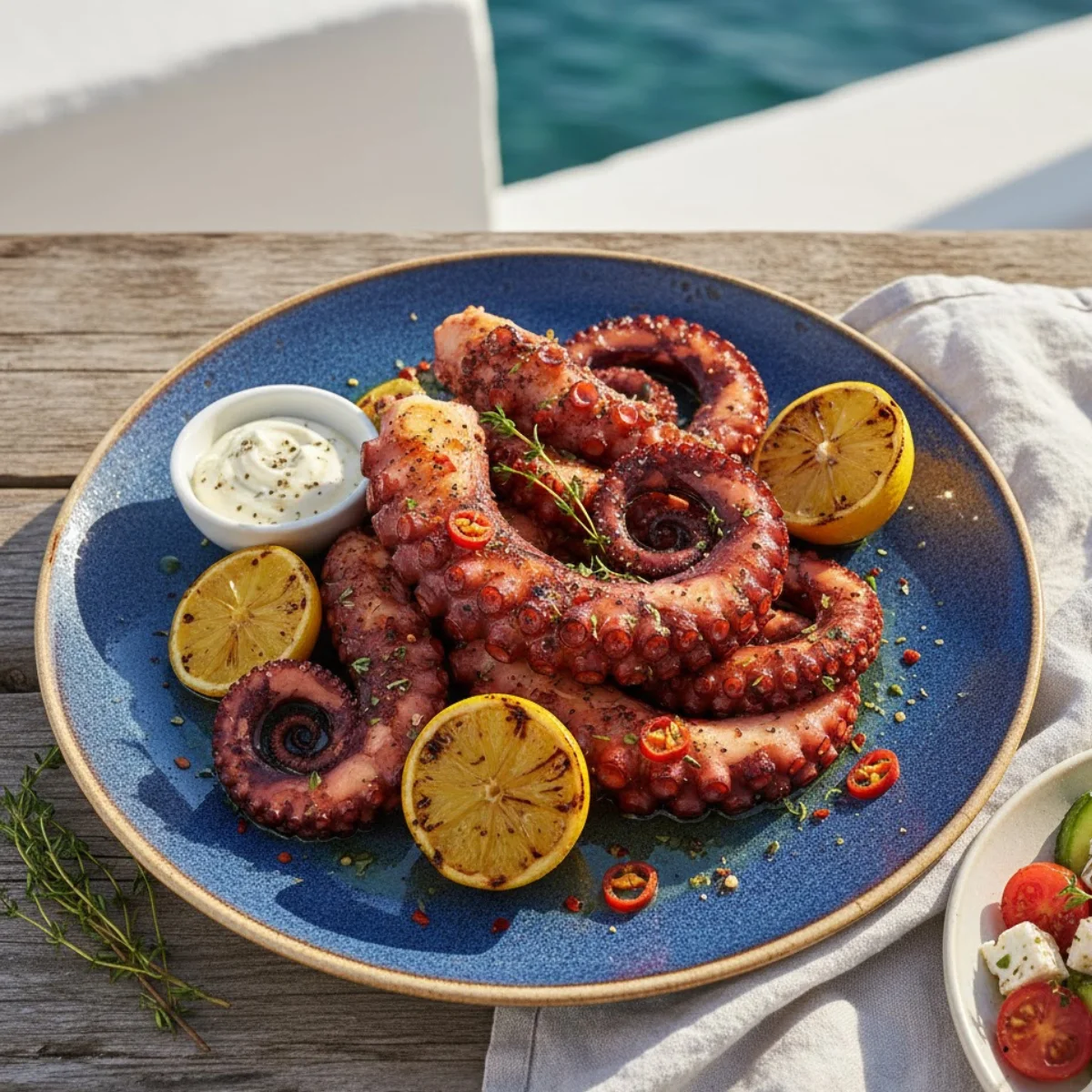
There’s something undeniably luxurious about grilled octopus. With its smoky char, tender bite, and Mediterranean flair, it’s a dish you often see at seaside tavernas in Greece or upscale restaurants across Europe. But here’s the good news—you don’t need a plane ticket or a Michelin star to enjoy it at home. With just a few ingredients and the right technique, you can prepare grilled octopus in your own kitchen that rivals the very best.
Why This Recipe Works
Grilled octopus can be intimidating, but it doesn’t have to be. Many people shy away from cooking it at home because they worry it will turn rubbery, bland, or difficult to handle. The secret lies in two simple steps: a gentle simmer for tenderness, followed by a quick sear for flavor and texture.
This foolproof two-step method ensures that your octopus turns out silky, tender, and packed with smoky, briny goodness every time. And the best part? You only need a handful of pantry ingredients—olive oil, oregano, garlic, onion, and lemon—to highlight the natural sweetness of the octopus without overpowering it.
Ingredients You’ll Need
-
2–3 pounds whole octopus, cleaned
-
1 bay leaf
-
1 small onion, halved
-
2 garlic cloves, smashed
-
Salt, to taste
-
3 tablespoons olive oil
-
1 teaspoon dried oregano (or fresh, if available)
-
1 lemon, cut into wedges
Kitchen Equipment
To make this recipe with ease, gather the following tools:
-
Large stockpot
-
Tongs
-
Sharp chef’s knife
-
Cutting board
-
Grill (charcoal or gas)
-
Basting brush
-
Paper towels
-
Serving platter
Step-by-Step Instructions
1. Tenderize the Octopus
Place your cleaned octopus in a large pot with the onion halves, bay leaf, smashed garlic, and a pinch of salt. Cover with water and bring to a gentle simmer. Cook for 45–60 minutes, depending on size, until fork-tender.
💡 Chef’s Tip: Avoid boiling aggressively. A rolling boil will make the octopus tough. Keep it at a steady, gentle simmer for the perfect silky texture.
2. Cool and Dry
Remove the octopus and allow it to cool slightly. Pat it dry thoroughly with paper towels—this step is crucial. A dry surface ensures those golden, crisp grill marks we’re after.
3. Portion the Tentacles
Separate the tentacles and slice the head into manageable pieces if you’re including it. This ensures even grilling and maximum caramelization.
4. Prep the Grill
Preheat your grill to medium-high heat. Brush the octopus pieces with olive oil and sprinkle with oregano.
5. Grill to Perfection
Place the tentacles directly on the grill. Cook for 3–4 minutes per side, until charred and crisp around the edges. Watch closely—this transformation happens quickly!
6. Finish and Serve
Transfer to a serving platter, drizzle with extra olive oil, and finish with a squeeze of lemon juice. Serve immediately while warm and smoky.
Notes & Pro Tips
-
Buying Octopus: Frozen octopus is often better than fresh because freezing naturally tenderizes it. Thaw it overnight in the fridge before cooking.
-
Extra Flavor: Add whole peppercorns, celery, or a splash of white wine to the simmering liquid for subtle depth.
-
Make It Spicy: Sprinkle with chili flakes before grilling for a fiery Mediterranean twist.
-
Alternative Seasonings: Swap oregano with thyme, rosemary, or smoked paprika for different flavor profiles.
Recipe Variations
-
Spanish-Style Pulpo a la Gallega: Slice the grilled octopus and serve over boiled potatoes, drizzled with olive oil and dusted with smoked paprika.
-
Octopus Salad: Skip the final grilling and toss the simmered octopus with olive oil, lemon, parsley, and capers for a refreshing cold salad.
-
Asian-Inspired: Brush the tentacles with sesame oil and soy sauce before grilling, then finish with a sprinkle of toasted sesame seeds.
How to Store Leftovers
Grilled octopus is best eaten fresh, but you can store leftovers:
-
Refrigerator: Store in an airtight container for up to 2 days. Reheat gently in a skillet or on the grill—avoid microwaving to prevent rubbery texture.
-
Freezer: Cooked octopus can be frozen for up to 2 months. Thaw overnight in the fridge and reheat as above.
Food & Drink Pairings
-
Sides: Pair with grilled vegetables, roasted potatoes, or a crisp Greek salad with feta.
-
Wine: A chilled glass of Assyrtiko (Greek white wine), Sauvignon Blanc, or a dry rosé pairs beautifully.
-
Beer: A light lager or citrusy IPA balances the smoky flavors.
-
Condiments: Try a side of aioli, chimichurri, or tzatziki for dipping.
Frequently Asked Questions
Q: How do I keep octopus from turning rubbery?
A: The key is to simmer gently—never boil. Low, steady heat keeps the flesh tender and silky.
Q: Can I cook octopus without a grill?
A: Yes! A cast-iron skillet or grill pan works beautifully. Just make sure it’s piping hot to achieve a good sear.
Q: Should I peel the skin off the octopus?
A: Not necessary. The skin crisps beautifully on the grill and adds flavor. If you prefer, you can remove some of the outer skin after simmering.
Q: Do I need to tenderize the octopus beforehand with special techniques (like beating it)?
A: No—modern cooking doesn’t require that. Freezing or slow simmering achieves the same tenderizing effect.
Q: What if I only have octopus tentacles, not whole octopus?
A: Perfect! Tentacles are the best part for grilling. Follow the recipe as written, but adjust cooking time slightly since smaller pieces may cook faster.
Final Thoughts
Grilled octopus may sound like a restaurant-only delicacy, but with this foolproof method, you can recreate that smoky, tender magic at home with ease. A simple simmer and a quick char are all it takes to transform a humble ingredient into an elegant centerpiece.
Whether you’re hosting friends, planning a romantic dinner, or simply craving bold Mediterranean flavors, this dish will never disappoint.
Call to Action
If you loved this recipe for Grilled Octopus at Home: The Foolproof Method, don’t keep it to yourself! Share it with your friends and family, and be sure to subscribe to our blog for more high-end, approachable recipes that bring restaurant-quality flavors straight to your kitchen.